

Get Started
Considerations, Tips & Insights for Senior Living
Considerations, Tips & Insights for Senior Living

01. Signs It’s Time for Senior Care
- Difficulty with daily activities like bathing, dressing, and cooking
- Frequent falls or injuries
- Memory loss affecting daily life
- Neglected hygiene and home upkeep
- Social isolation and loneliness
- Worsening medical conditions requiring constant monitoring
02. Financial Considerations
Medicare and most health insurance plans do not cover standard senior care. Below are cost estimates for Southeast Michigan:
In-home care:
$32/hour (minimum 4-hour shifts)
Assisted living:
$6,500/month (range: $4,000-$9,000+ depending on care level)
Memory care:
Higher costs based on needs

Ways to Pay for Senior Care:
- Social Security & Pensions
- Savings
- Sale of a home
- Long-term care insurance
- Investments & Annuities
- Veteran Benefits
- Medicaid (for low-income seniors)
- Family Contributions
- Donations or Charitable Support
02. What Are Different Types of Senior Care?
In-home care: Caregivers assist with daily tasks at home.
Independent living: For seniors who are active but want a community setting.
Assisted living: Housing with some medical and personal care support.
Memory care: Specialized care for dementia and Alzheimer’s patients.
Skilled nursing facilities: Full-time medical care and rehabilitation.
04. How Do I Determine What Is Needed?
- Assess medical needs and daily activity limitations
- Consider cognitive health and memory concerns
- Evaluate home safety and risk of falls
- Review emotional and social needs
- Consult with a geriatric care manager or doctor
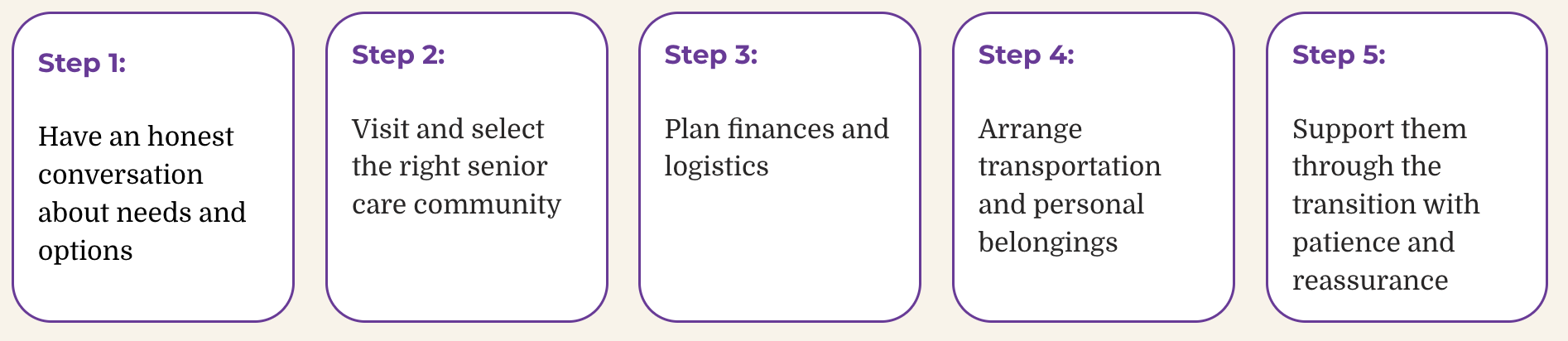
05. How Do I Move My Family Member?
06. What Questions Should I Ask on a Visit?
- What level of care is provided?
- What are the staff-to-resident ratios?
- Are medical services available 24/7?
- What activities and social opportunities are available?
- How does the facility handle emergencies?
- Are meals customizable for dietary restrictions?
- What is the cost structure and payment options?